When your car refuses to start, one of the first suspects is usually the battery. The car battery plays a critical role in providing the initial electrical power needed to start your engine and run essential systems. However, like all components, it has a limited lifespan. Knowing how do you know if your car battery is dead can save you time, frustration, and even money on unnecessary repairs.
In this detailed guide, we’ll explore the signs, causes, testing methods, and solutions to help you confirm if your car battery is dead or just temporarily discharged.
What Is a Car Battery?
A car battery is a rechargeable power source that provides electricity to start your vehicle and supply energy to all electrical components. Most modern cars use lead-acid batteries, which work by converting chemical energy into electrical energy through reactions between lead plates and sulfuric acid.
Without a functioning battery, your car cannot power the starter motor, fuel pump, or ignition system, making it impossible to start.
Common Signs of a Dead Car Battery
Recognizing the symptoms of a dead or dying battery helps you act quickly before you get stranded. Here are the most common signs:
1. Engine Cranks Slowly or Doesn’t Crank at All
If you turn the key and the engine turns over slowly or not at all, this is a classic sign of a weak or dead battery. The starter motor needs adequate current from the battery to crank the engine, and low voltage will cause sluggish cranking.
2. Clicking Sound When Starting
A single click or a rapid series of clicks usually means the battery voltage is too low to engage the starter motor. This clicking noise is the solenoid trying but failing to activate.
3. Dim Headlights and Interior Lights
Dim or flickering headlights are another warning sign. Since the battery powers all electrical systems when the engine is off, weak lights suggest low battery charge.
4. Dashboard Warning Light
Most modern vehicles have a battery warning light on the dashboard. If it illuminates while driving, it may indicate a failing battery or charging issue with the alternator.
5. Electrical Accessories Not Working Properly
If the radio, air conditioning, or power windows work sluggishly or not at all, it’s a strong indicator your battery may be near the end of its life.
6. The Car Starts Only After a Jump
If your car starts only after being jump-started but dies again soon after, your battery may not hold a charge or your alternator might be malfunctioning.
7. Corrosion on Battery Terminals
White or blue-green corrosion on the terminals can restrict the flow of electricity, leading to starting problems. Cleaning the terminals might help, but excessive corrosion could mean the battery is nearing failure.
8. Swollen or Leaking Battery Case
Overcharging, extreme heat, or internal damage can cause the battery case to swell or leak. A bloated or cracked case is a sure sign the battery is unsafe and needs immediate replacement.
9. Rotten Egg Smell
If you notice a strong sulfur or rotten egg odor around the battery, it likely indicates leaking acid due to internal failure. This smell is toxic and signals it’s time to replace the battery immediately.
Common Causes of a Dead Battery
Car batteries don’t die without reason. Understanding the causes can help you prevent future failures:
- Age: Most batteries last 3–5 years depending on usage and climate.
- Extreme Temperatures: Heat accelerates fluid evaporation, while cold reduces power output.
- Parasitic Drain: Leaving lights, chargers, or accessories plugged in when the engine is off drains the battery.
- Faulty Alternator: If the alternator isn’t charging properly, the battery will die even while driving.
- Corrosion or Loose Terminals: Poor connections limit electrical flow.
- Frequent Short Trips: Short drives don’t allow the alternator enough time to recharge the battery.
How to Test If Your Car Battery Is Dead
You don’t need to be a mechanic to check if your battery is dead. Here are several reliable methods:
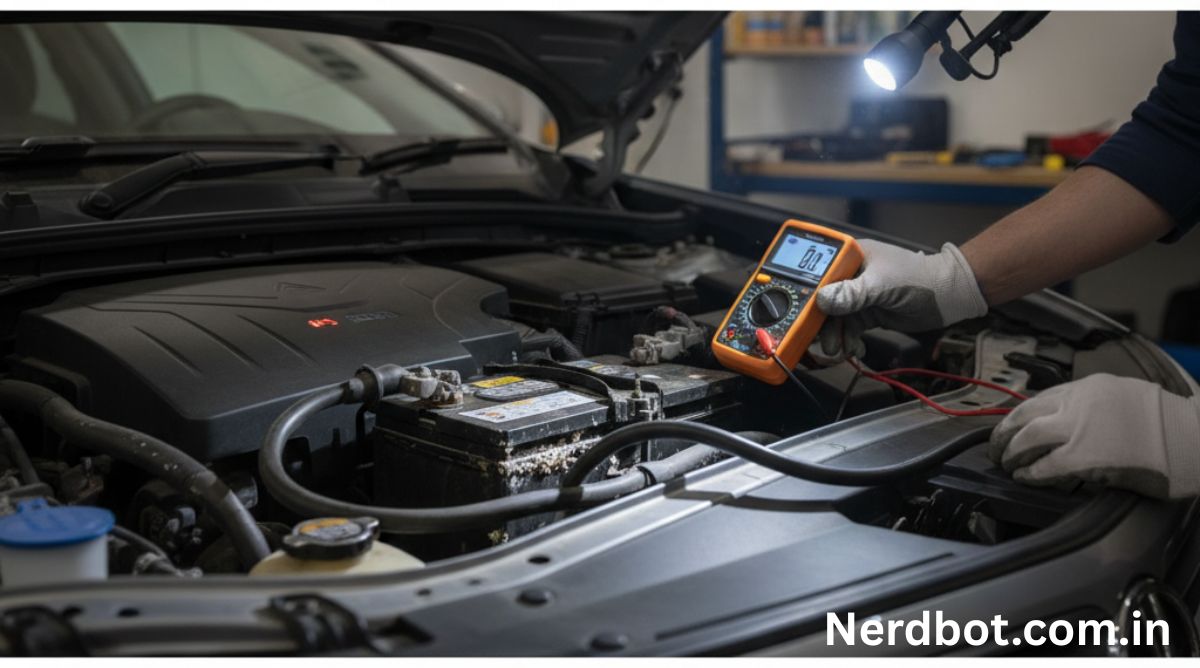
1. Use a Voltmeter or Multimeter
The most accurate way to test a battery’s health is by checking its voltage.
Steps:
- Turn off the engine and all accessories.
- Set the multimeter to DC voltage (20V range).
- Place the red probe on the positive (+) terminal and the black probe on the negative (-) terminal.
- Check the reading:
- 12.6 volts or more: Fully charged.
- 12.4 volts: 75% charged.
- 12.0 volts: Weak.
- Below 11.8 volts: Likely dead.
A healthy car battery should read around 12.6V when the car is off and between 13.7V–14.7V when running (indicating proper alternator charging).
2. Perform a Headlight Test
Turn on your headlights without starting the car:
- If the lights are bright, your battery likely has some charge.
- If they’re dim, the battery is weak or nearly dead.
3. Try to Start the Car
If the car starts only with a jump-start, it’s a sign your battery is failing. However, if it dies soon after disconnecting the jumper cables, your alternator may not be charging properly.
4. Load Test at an Auto Parts Store
Most auto parts stores offer free battery load testing. This test checks how your battery performs under simulated starting conditions, providing a clear picture of its health.
Battery vs. Alternator: How to Tell the Difference
Sometimes, a car won’t start even if the battery is fine because the alternator is faulty. Here’s how to distinguish between the two:
| Symptom | Likely Issue |
|---|---|
| Car starts after jump but dies soon | Bad alternator |
| Car won’t start even with a jump | Dead battery |
| Battery light stays on while driving | Alternator issue |
| Dim lights improve when revving engine | Weak alternator |
If you suspect the alternator, have it tested professionally.
What to Do If Your Battery Is Dead
Once you’ve confirmed your battery is dead, here’s what to do next:
1. Jump-Start the Car
You can temporarily revive your car with a jump-start.
Steps:
- Connect the red clamp to the positive terminal of the dead battery.
- Connect the other red clamp to the positive terminal of the good battery.
- Attach the black clamp to the negative terminal of the good battery.
- Attach the final black clamp to an unpainted metal surface on your car.
- Start the working vehicle, then the dead one.
Let it run for several minutes before removing the cables in reverse order.
2. Use a Battery Charger
If you have time, use a battery charger to recharge your battery slowly. This is safer and helps restore the charge more effectively than a jump-start.
3. Replace the Battery
If your battery fails to hold a charge even after recharging, replacement is necessary. Most car batteries cost between $70 and $200, depending on the brand and type.
When to Replace Your Battery
Replace your car battery if you notice:
- It’s older than 3–5 years.
- It fails multiple voltage or load tests.
- There’s physical damage, swelling, or acid leakage.
- The car requires frequent jump-starts.
A new battery ensures reliability, better electrical performance, and longer lifespan for your vehicle’s systems.
Tips to Prevent a Dead Battery
- Regularly inspect terminals and clean corrosion using baking soda and water.
- Tighten connections to ensure proper current flow.
- Drive your car frequently or use a trickle charger if you don’t.
- Avoid leaving lights or accessories on when the engine is off.
- Protect from temperature extremes by parking indoors or in shade.
- Check alternator health during regular maintenance.
Preventive care extends your battery life and saves you from sudden breakdowns.
Recycling Dead Car Batteries
Dead car batteries contain toxic materials like lead and sulfuric acid, which can harm the environment if not disposed of correctly. Fortunately, automotive battery recycling programs safely recover and reuse these materials.
Most auto parts stores or recycling centers accept old batteries for free or even offer a small refund. Recycling reduces pollution and conserves valuable resources.
Professional Help vs. DIY Diagnosis
While simple voltage and visual checks can be done at home, complex electrical issues often require a professional. A certified mechanic can test your battery, alternator, and wiring system to identify the root cause quickly and safely.
DIY methods are cost-effective but should be used carefully — mishandling batteries can result in acid burns or electric shock. Always wear gloves and safety glasses when working around the battery.
Conclusion
Understanding how do you know if your car battery is dead is an essential skill for any vehicle owner. From dim headlights and slow engine cranking to dashboard warnings and corrosion, these symptoms can alert you before total failure occurs.
Using tools like a multimeter or seeking a professional battery test helps confirm your diagnosis. Whether your battery is weak or completely dead, you can often revive it temporarily with a jump-start or charger — but long-term reliability comes from timely replacement.
Taking preventive measures such as regular maintenance, proper charging, and safe recycling will ensure that your battery — and your car — stay in top shape for years to come.
About the Author