




A dead or failing battery is one of the most common reasons a car refuses to start. Whether you drive a modern SUV or an older sedan, understanding how to tell if your battery is dead can save you time, frustration, and even money. Car batteries have a limited lifespan, and over time, they lose their ability to hold a charge. Recognizing the early signs of a weak or dying battery allows you to replace it before you get stranded.
In this complete guide, we’ll walk through the symptoms, testing methods, and solutions for diagnosing a dead car battery.
What Is a Car Battery?
A car battery is a rechargeable energy storage device that provides the electrical power needed to start your vehicle and operate accessories like lights, wipers, and infotainment systems. Most vehicles use lead-acid batteries, which convert chemical energy into electrical energy through chemical reactions between lead plates and sulfuric acid.
When the battery weakens or dies, it can’t supply the necessary current to the starter motor, leaving your vehicle immobile.
Why Car Batteries Die
Batteries can die for several reasons, including:
- Age: Most car batteries last between 3 to 5 years.
- Extreme temperatures: Excessive heat or cold can degrade battery performance.
- Parasitic drains: Leaving lights or accessories on when the engine is off drains power.
- Corrosion: Corroded terminals reduce conductivity.
- Faulty alternator: If the alternator isn’t charging the battery properly, it will drain quickly.
- Short trips: Frequent short drives don’t give the alternator enough time to recharge the battery.
Understanding these causes helps in preventing premature failure.
Symptoms of a Dead or Dying Battery
Recognizing the symptoms of a failing battery is the first step in diagnosing the problem. Here are some of the most common signs:
1. The Engine Cranks Slowly
When you turn the key, the engine may turn over sluggishly or not at all. This slow cranking sound often indicates that the battery doesn’t have enough charge to power the starter motor.
2. Clicking Noise When Starting
If you hear a rapid clicking sound instead of the engine turning, it usually means there’s not enough voltage in the battery to engage the starter.
3. Dim Headlights and Electrical Issues
Dim headlights, flickering dashboard lights, or malfunctioning power windows can all indicate a weak battery. Since the battery powers these electrical components, low voltage causes inconsistent performance.
4. Dashboard Warning Light
Most modern cars have a battery warning light on the dashboard. If it appears, it could signal a weak battery, charging problem, or alternator malfunction.
5. The Car Won’t Start at All
If your car is completely silent when you turn the key, the battery might be entirely dead. In this case, even the dashboard lights may not illuminate.
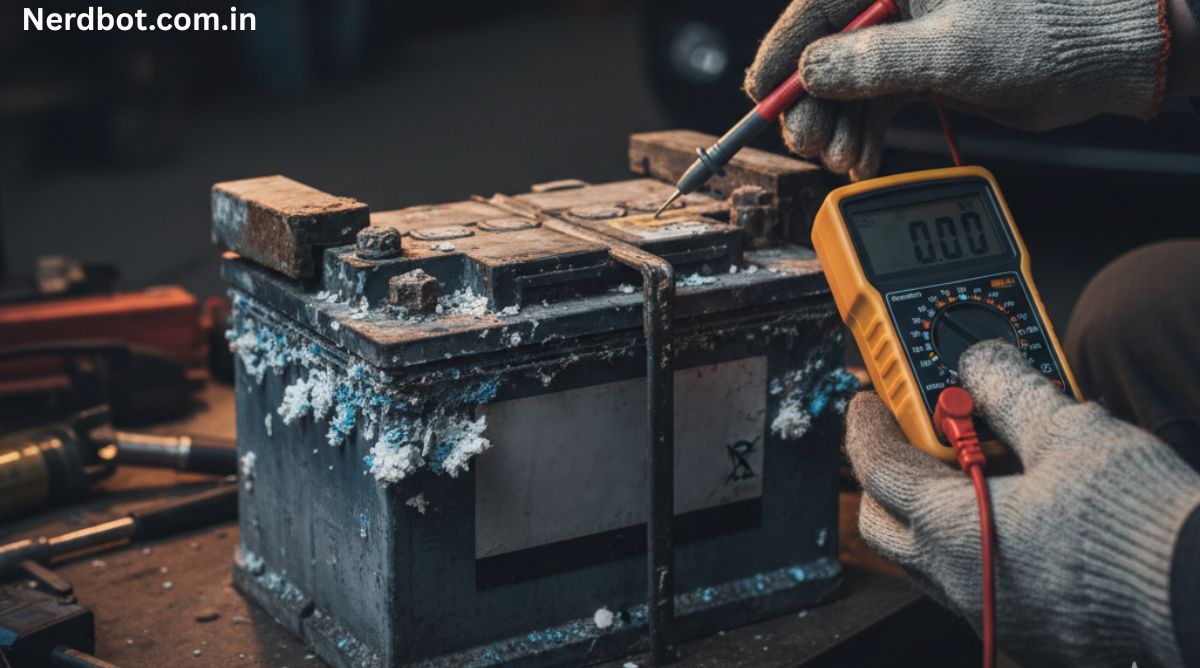
6. Corrosion on Battery Terminals
Check the battery terminals for white or blue-green powdery buildup. Corrosion prevents good electrical contact and can lead to poor performance or starting issues.
7. Swollen or Bloated Battery Case
Heat or overcharging can cause the battery case to swell, which indicates internal damage. If you notice this, the battery must be replaced immediately.
8. Strange Smell
A dead or damaged battery may emit a rotten egg odor, caused by leaking sulfuric acid. This is a clear sign the battery is failing and should be replaced to prevent further damage.
How to Test If Your Battery Is Dead
There are several ways to check whether your battery is truly dead or just discharged.
1. Use a Voltmeter or Multimeter
A voltmeter or multimeter measures the voltage of your battery.
Steps:
- Turn off the engine and lights.
- Set the multimeter to DC voltage (20V range).
- Connect the red probe to the positive (+) terminal and the black probe to the negative (-) terminal.
- Read the voltage:
- 12.6V or above: Battery is fully charged.
- 12.4V–12.5V: Partially charged.
- 12.0V or below: Battery is weak.
- 11.8V or less: Battery is likely dead.
2. Headlight Test
Turn on your headlights without starting the engine.
- If the lights are bright, the battery has some charge.
- If they are dim or fade quickly, it’s a sign of low voltage.
3. Jump-Start the Vehicle
Use jumper cables and another working vehicle. If your car starts after the jump and continues running, your battery was likely discharged. However, if it stalls soon after removing the cables, the alternator may not be charging the battery properly.
4. Load Test
Auto parts stores often offer free battery load testing. This test applies a load to the battery and measures how it performs under pressure, giving a more accurate assessment of its health.
Alternator vs. Battery: Which Is the Problem?
Sometimes, a dead battery is actually a symptom of a failing alternator. Here’s how to differentiate:
| Symptom | Likely Cause |
|---|---|
| Car starts after jump but dies soon after | Faulty alternator |
| Car won’t start even after jump | Dead battery |
| Dashboard battery light is on while driving | Alternator issue |
| Lights dim while driving | Alternator not charging properly |
If the alternator fails, it won’t recharge the battery as you drive, leading to frequent battery drains.
How to Revive a Dead Battery
Sometimes, a battery can be revived if it’s only discharged (not physically damaged).
1. Jump-Start Method
The simplest way to get a dead battery running is by using jumper cables.
Steps:
- Connect the red clamp to the dead battery’s positive terminal.
- Connect the other red clamp to the good battery’s positive terminal.
- Connect the black clamp to the good battery’s negative terminal.
- Attach the remaining black clamp to a grounded metal surface on the dead vehicle (not the battery).
- Start the working vehicle and let it run for a few minutes.
- Try starting the dead car.
2. Battery Charger Method
If you have a battery charger, connect it and let it charge slowly. A trickle charger can restore charge overnight without overheating.
3. Push Start (Manual Cars Only)
If you drive a manual transmission car, you can try a push start by rolling the car, engaging second gear, and releasing the clutch while pressing the accelerator.
When to Replace the Battery
Even with the best care, car batteries eventually wear out. Consider replacing your battery if:
- It’s over 3–5 years old.
- It fails load or voltage tests repeatedly.
- You’ve jump-started it multiple times in a short period.
- There are visible cracks, leaks, or bulging.
A new car battery typically costs between $70 and $200, depending on the type and brand.
Preventive Maintenance Tips
To extend your battery’s lifespan, follow these practices:
- Clean the terminals regularly using baking soda and water.
- Check the alternator periodically to ensure proper charging.
- Tighten the battery connections to avoid loose contact.
- Turn off lights and accessories when the engine is off.
- Avoid short trips that don’t allow the alternator to recharge the battery fully.
- Protect from extreme temperatures by parking in a garage or shaded area.
What to Do If Your Battery Dies Frequently
If your battery dies often, it might not be the battery’s fault. Possible reasons include:
- Faulty alternator or voltage regulator
- Parasitic electrical drain (like a stuck relay or light)
- Corroded or loose battery terminals
- Bad starter motor
A professional mechanic can perform a parasitic drain test to identify hidden electrical problems.
Environmental Impact of Dead Batteries
Car batteries contain lead and acid, which are hazardous to the environment. Always dispose of old batteries responsibly. Most auto parts stores and recycling centers offer free battery recycling programs. According to Wikipedia, recycling rates for lead-acid batteries exceed 95%, making it one of the most successfully recycled products in the world.
Final Thoughts
Knowing how to tell if your battery is dead is an essential part of basic car maintenance. The signs—slow cranking, dim lights, warning indicators, and corrosion—are easy to spot if you know what to look for. Testing your battery with a voltmeter, performing a jump-start, or having it load-tested at an auto shop can confirm the diagnosis.
A car battery is the heart of your vehicle’s electrical system, and taking care of it ensures a smooth and reliable driving experience. With regular maintenance, testing, and proper handling, you can avoid unexpected breakdowns and keep your car in top condition.